

Common Mistakes That Delay a Thai Marriage Visa Renewal
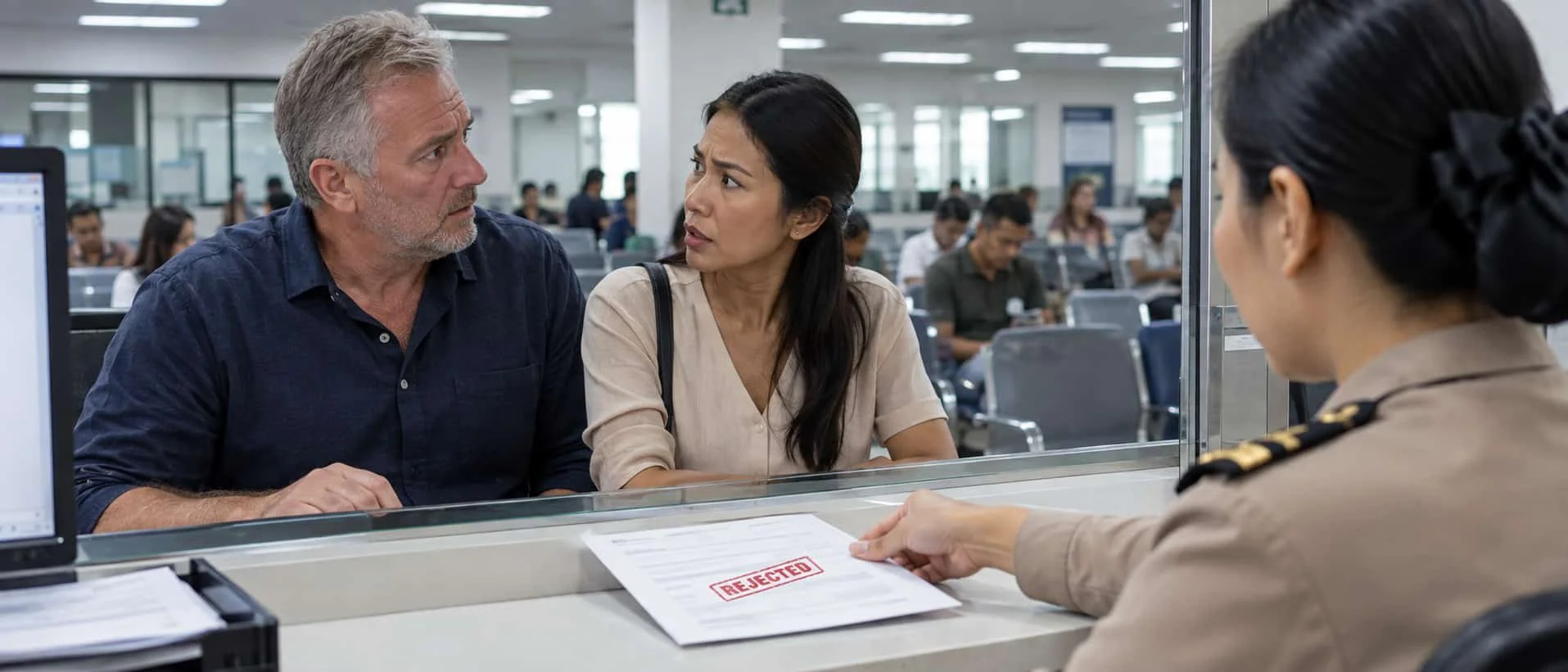
Most marriage visa renewals that run into trouble are not rejected because the marriage itself is in question. They are delayed by a document, a timing detail, or a requirement nobody warned the applicant about. Here are the mistakes that come up most often, and how to avoid each one.
Skipping a Step in the Marriage Certificate Chain
If you married abroad, your certificate needs to go through a specific chain before Thai Immigration accepts it: legalized in your home country, translated into Thai, validated by your own Thai embassy, then legalized again in Thailand at the Ministry of Foreign Affairs. Missing one step in this order, or assuming a shortcut is possible, is one of the most common reasons a foreign marriage certificate gets rejected on first submission. This chain can take weeks depending on your country, so it needs to start well before your visa deadline, not once your appointment is already close.
Not Knowing About the Witness Requirement
In many offices, immigration asks the couple to bring one or more Thai witnesses who can personally confirm the relationship is genuine. Applicants who have never heard of this requirement often arrive without anyone in mind, which can turn a routine appointment into a second trip. Even where it is not required, it is worth knowing in advance who could act as one if asked.
Cohabitation Photos That Only Show the Outside of the House
Proof of living together needs to actually show that: photos of the couple's bedroom, living room, and kitchen, not just a picture of the front door or the building. A folder of photos that only proves you know where the house is, rather than that you live in it together, is a common and avoidable gap.
Using a Joint Bank Account
The financial requirement, whether the 400,000 THB deposit or the 40,000 THB monthly income, needs to be held in the foreign applicant's own name. Funds held jointly with a Thai spouse are generally not accepted as meeting this requirement on their own.
Assuming the Two Financial Methods Can Be Combined
Some general information available online describes combining a smaller deposit with a smaller income to reach the required total. In our own service area, this is not accepted: the requirement must be met in full through one method or the other. Relying on a combination found in a general guide, rather than confirming with the office handling your file, can mean arriving with a file that falls short on both counts.
Getting the Proof of Residence Wrong
The correct paperwork depends on how the home is owned. A rental contract needs revenue stamps affixed, calculated at 0.1 percent of the total rent for the lease period, purchased from the Revenue Department. If the Thai spouse owns the home, it is their blue house book that applies, not a document meant for a foreign owner. Bringing the wrong version of this proof is an easy mistake to make and an easy one to avoid with a quick check beforehand.
Bringing an Outdated Bank Letter
A bank letter or updated bankbook copy that is more than a few days old is often rejected outright. This is the same rule that applies to every visa category, and it catches marriage visa applicants just as often as anyone else.
Using a Foreign Bank Account for the Renewal
Only a Thai bank account counts once you are extending your stay from inside Thailand, regardless of what may have been accepted for the original visa abroad.
Forgetting a Re-Entry Permit Before Traveling
Leaving Thailand at any point during your extension, even for a short trip, cancels your permission to stay unless you hold a re-entry permit first. This has nothing to do with whether your marriage paperwork is correct. A perfectly valid extension still ends the moment you exit the country without one.
Letting the Extension Expire While Abroad
This is the most serious version of the mistake above. If your extension is due to expire while you are traveling, and you do not return to Thailand in time to renew it in person, the extension is lost completely. A re-entry permit only preserves your status until its original expiry date, it never extends that date. At that point, there is no late renewal option, you would need to apply for an entirely new visa from outside Thailand, starting the whole process over.
Filing Outside the Accepted Window
Extensions are generally filed within the final 30 to 45 days before expiry, though the exact window can vary between immigration offices. Filing too early is sometimes turned away just as filing too late is, so it is worth confirming the accepted window with your specific office rather than assuming a fixed rule applies everywhere.
How We Help
None of these mistakes are complicated on their own, but catching them requires someone to actually
check your file before you are standing at the counter.
With our Standard service, we come to you, review your documents against what your specific office expects, and help you complete the required forms, so you know exactly what is missing before you submit anything yourself.
With our Premium service, we go further: we assemble your complete file, accompany you to the immigration office, and handle everything through to the final pickup of your passport.
If you are approaching a marriage visa renewal in Hua Hin, Cha-am, or Pranburi, contact us for free guidance on your situation before your appointment.